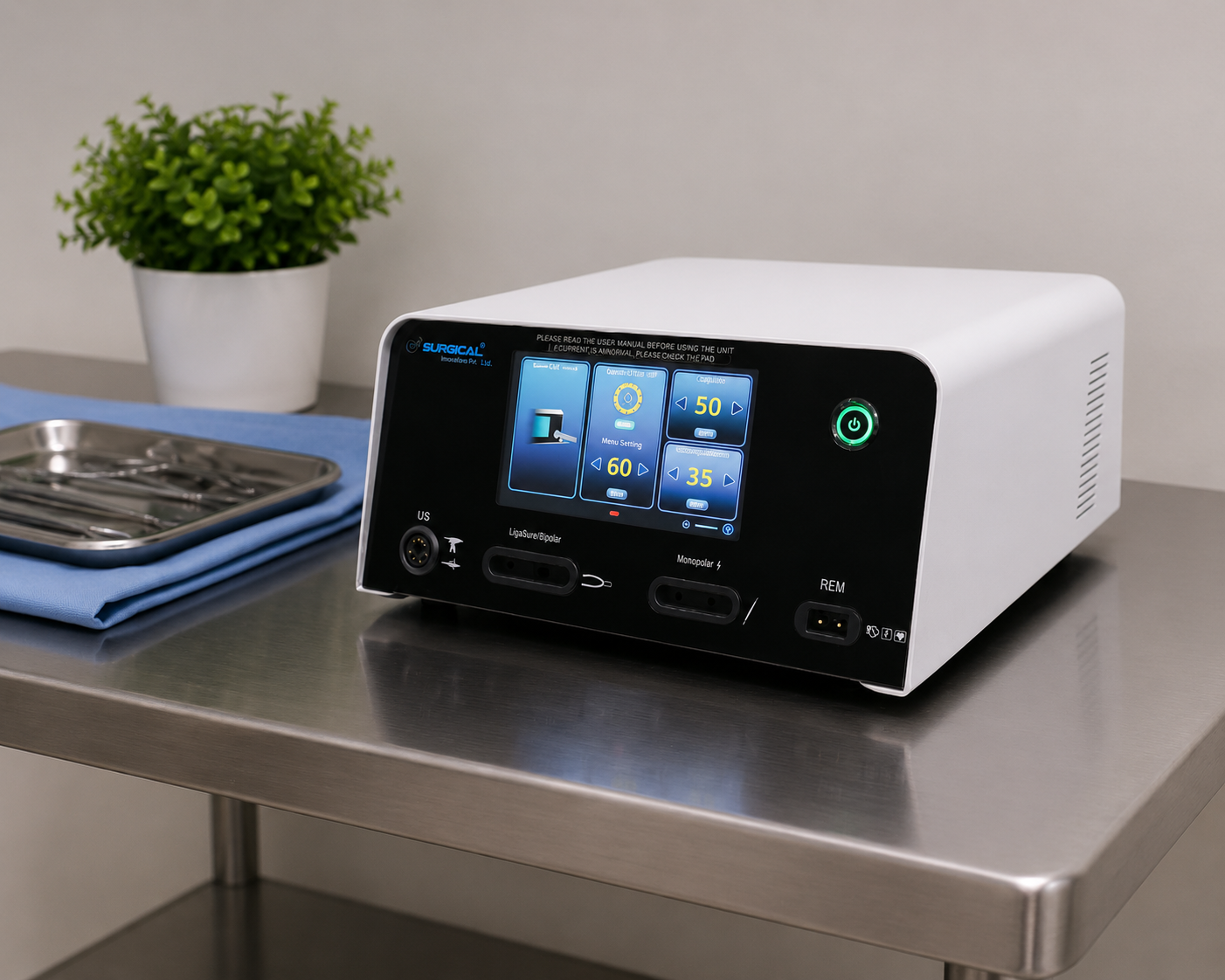
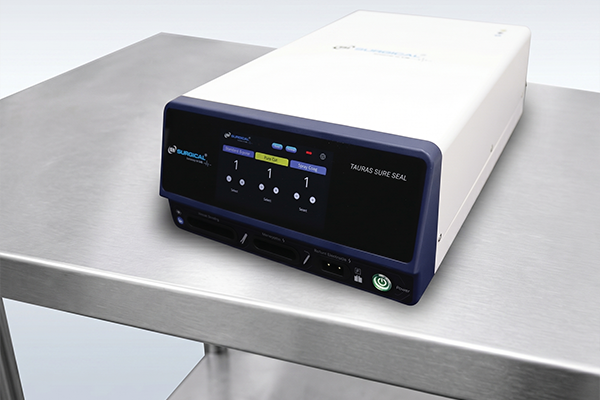
Both affordable & portable, easy-to-use, The platform is intended for open & laparoscopic surgical procedures
Gripping and clamping vessel structures
The jaws of the Erbe vessel sealing instruments are used to grasp the tissue, and to securely grip and compress it. As a result of the pressure, tissue fluid and blood in the tissue are expelled, and the vessel walls pressed together. When they engage, the jaws of the BiCision® instruments apply a defined, optimal force to the tissue that has been gripped-without the user having to exert any effort. With the BiClamp instruments, the user regulates the pressure applied to the tissue. However, the maximum force cannot be exceeded due to the design and geometry of the instruments
BiClamp® current flow between the jaws
When BiClamp mode is activated, the generator initiates an electrical charge between the two electrodes of the jaws. The tissue that has been gripped is heated from within by this locally limited current. BiClamp mode adapts to the condition, vascularization and water content of the target tissue, and monitors the sealing process. Vessel sealing differs from conventional bipolar coagulation in terms of the current profile and the force applied to the tissue, as well as with regard to the instrument geometry
The reliability of BiClamp sealing
Thermofusion with BiChamn allows effective sealing of blood vessels un to a diameter of 7mm and vascularized tissue. The histological cross-section shows that the sealing zone has been irreversibly fused. Additional ligation or coagulation of the sealing zone prior to separation is thus generally not required
Benefit: The Advantages of The Bowl Shape
- Larger thermofusion zone than other instruments with 5 mm shaft and parallel jaw geometry
- The homogenous cut is always centered on the sealing zone.
- The cutting line is easy to visually monitor from the yellow marking on the cutter
The Advantages of Low Thermal Capacity
- Minimal coagulation seam, as the jaws are thermally insulated and cool down quickly
- Minimal tissue adhesion to the jaw
Shaft Rotation Facilitates Ergonomic Working
- The stop-free rotation allows the jaws to be precisely and conveniently positioned on the target tissue
Activation of The Electrosurgery Function
- Sealing is activated on the handle or with the footswitch
Function and Ergonomics of The Handle
- You can perform all work steps from the handle without changing your grip
Cutting Safety
- The lever position on the side of the handle prevents inadvertent cutting
General Surgery:
- Sigmoidectomy
- Gastrectomy
- Fundoplication
- Adrenalectomy
- Colectomy
- Liver surgery
- Adhesiolysis
- Splenectomy
- Appendectomy
- Adipositas surgery
GYNECOLOGY:
- Hysterectomy (TLH, LAX, LAVH)
- Wertheim operation
- Oophorectomy
UROLOGY:
- Prostatectomy
- Cystectomy
- Nephrectomy
BiCision S
05 mm, shaft length 200 mm No. 20195-310
BiCision M
05 mm, shaft length 350 mm No. 20195-311
BiCision L
05 mm, shaft length 450 mm No. 20195-312